
SEO For Beginners: The Complete No-Jargon Guide To Search Engine Optimisation
Quick Answer
SEO (search engine optimisation) is the process of making a website easier for search engines like Google to find, understand, and trust enough to recommend to people searching for related topics. It combines keyword research, on-page content, technical site health, and backlinks and it typically takes 3–6+ months of consistent work to show meaningful results, because trust and authority are earned over time, not switched on overnight.
Why I’m Writing This
A few years ago I sat down at my kitchen table, opened about fifteen browser tabs, and tried to teach myself SEO from scratch. By the end of the evening I knew what “SERP” and “domain authority” meant, technically, but I couldn’t have told you what to actually do on a Monday morning to help a real business. Every article I read seemed to be written by someone who already knew everything, for people who already knew everything.
It took months of trial, error, and a fair few wasted hours before it actually clicked. So this is the article I wish had existed back then. No assumed knowledge. No jargon left unexplained. Just a proper, honest walkthrough of what SEO is and how it works, written by someone who’s spent years since applying it for real clients with real websites, not just theorising about it.
What SEO Actually Is?
SEO stands for search engine optimisation, and at its core it’s the process of making your website easier for search engines to find, understand, and trust enough to show to people searching for things related to your business. That’s genuinely the whole concept, once you strip away the technical language.
When someone types a question or phrase into Google, Google’s job is to show them the most useful, relevant, trustworthy pages it can find for that specific search. SEO is everything you do to make sure your pages are the ones it picks. Google explains this process in fairly plain terms itself, and its how search works guide is genuinely worth a read once you’ve got the basics down.

How Search Engines Actually Work
Before any of this makes sense, you need to understand roughly what’s happening behind the scenes when someone searches for something.
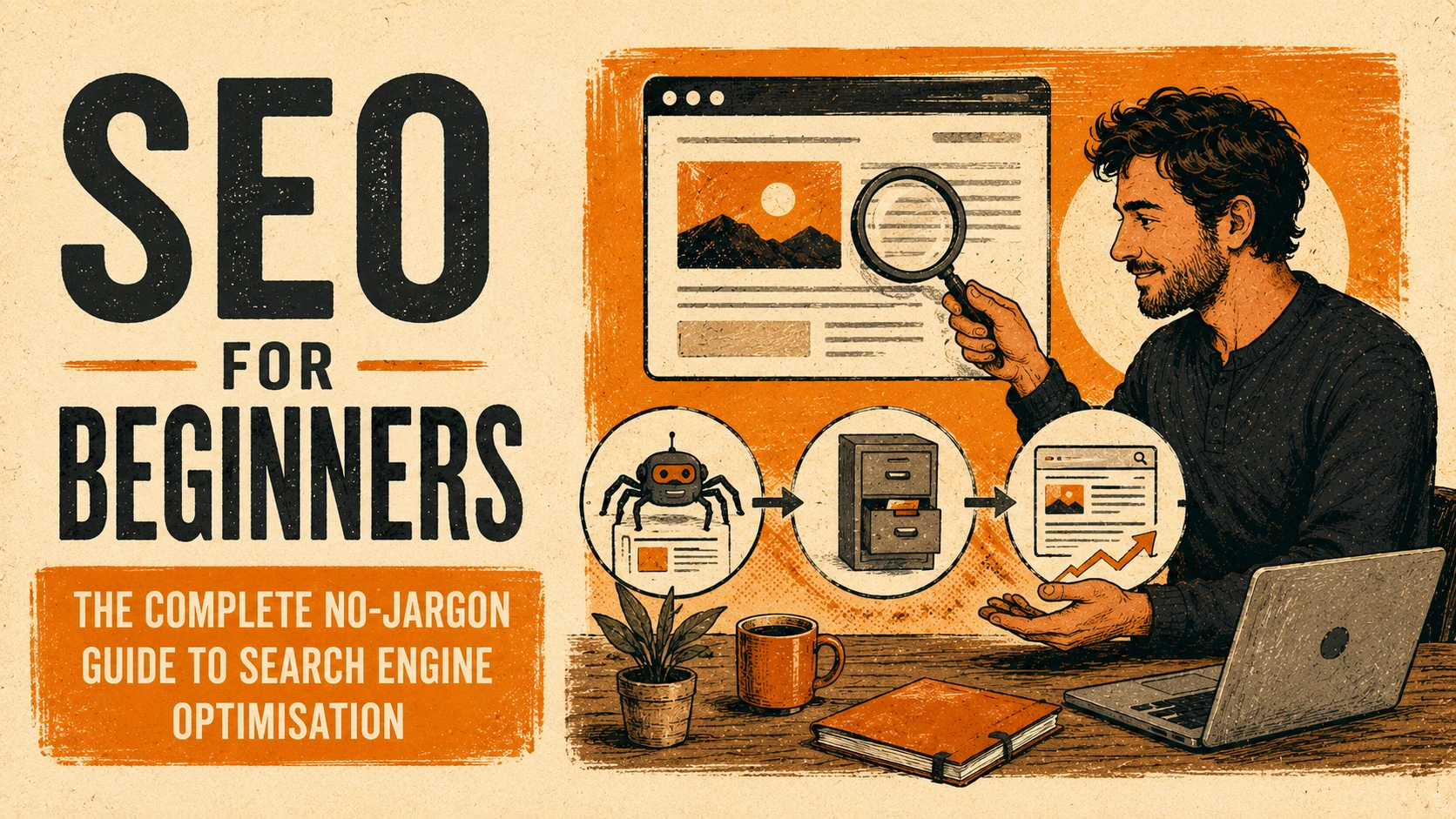
Google uses automated programs, often called bots or crawlers, that constantly move around the internet following links from page to page, reading and cataloguing what they find. This process is called crawling, and it’s how Google discovers your website exists in the first place.
Once a page has been crawled, Google decides whether to index it, which basically means adding it to its enormous database of pages eligible to show up in search results. Just because a page exists doesn’t automatically mean it gets indexed Google has to judge it worth including first.
Then, whenever someone runs a search, Google’s algorithm sorts through everything in that index and ranks the most relevant, useful results at the top. This ranking process considers hundreds of different signals: how relevant your content is to the search, how trustworthy and authoritative your site appears, how good the user experience is, and plenty more. SEO is the umbrella term for everything you do to influence those signals in your favour.
Keywords, And Why They’re Not As Simple As People Think
Keywords are the words and phrases people actually type into search engines. If you sell handmade candles in Manchester, someone might search “handmade candles Manchester” or “buy soy candles near me”. Understanding what your potential customers are actually searching for, and building your content around those real phrases, is one of the foundational pieces of SEO.
Where people go wrong is thinking keywords means stuffing a phrase into a page as many times as possible. That approach stopped working years ago and can actually damage how Google views your site. What actually works is understanding the intent behind a search — what the person genuinely wants when they type that phrase and making sure your page delivers that, in natural language, rather than repeating a phrase mechanically.
There are free and paid tools that help with this kind of research. Google’s own Keyword Planner is a solid free starting point, even though it’s technically built for advertising, and it’ll give you a real sense of what people are actually searching for around your business.
On-Page SEO
On-page SEO refers to everything you control directly on your own website that affects how well a page can rank. This covers your page titles, your headings, the actual written content, your images and how they’re described, and the overall structure of the page itself.
Your title tag — the clickable headline that shows up in Google’s search results — matters a lot here. It needs to accurately describe the page and ideally include the phrase people are likely searching for, without feeling forced or unnatural. Your headings should be organised logically, guiding both the reader and search engines through the structure of your content, rather than being scattered around for visual effect.
The actual written content matters most of all, though. Thin, vague pages that don’t really say much rarely rank well, no matter how well optimised the technical bits are. Google wants to serve genuinely useful, well-written content, and no amount of technical tweaking makes up for a page that doesn’t actually help anyone.
Technical SEO
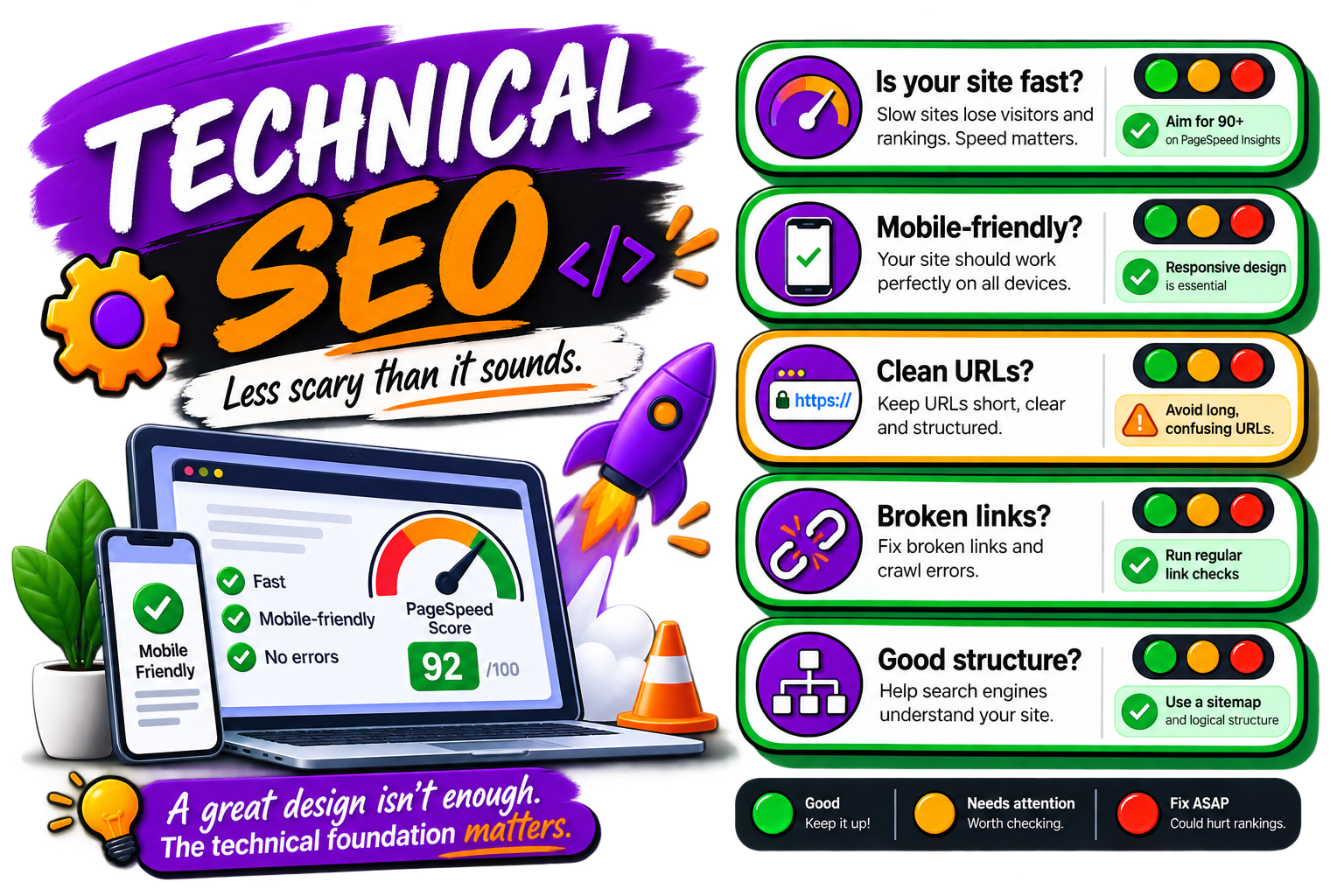
This is where things start to sound intimidating, but the concept is simpler than the name suggests. Technical SEO covers everything about how your website functions behind the scenes that affects a search engine’s ability to crawl, understand, and rank it properly. Things like how fast your site loads, whether it works properly on mobile devices, whether your URLs are structured sensibly, and whether there are broken links or errors getting in the way.
A slow, clunky site creates a poor experience for visitors, and Google factors that experience directly into rankings now. Site speed in particular has become a bigger and bigger factor over the years, and Google’s own PageSpeed Insights tool will show you exactly how your site performs and what’s slowing it down, completely free.
You don’t need to become a developer to grasp technical SEO, but you do need to understand that a beautiful-looking website can still be quietly failing at SEO if the underlying technical foundation is a mess.
Content Is Still King, Genuinely
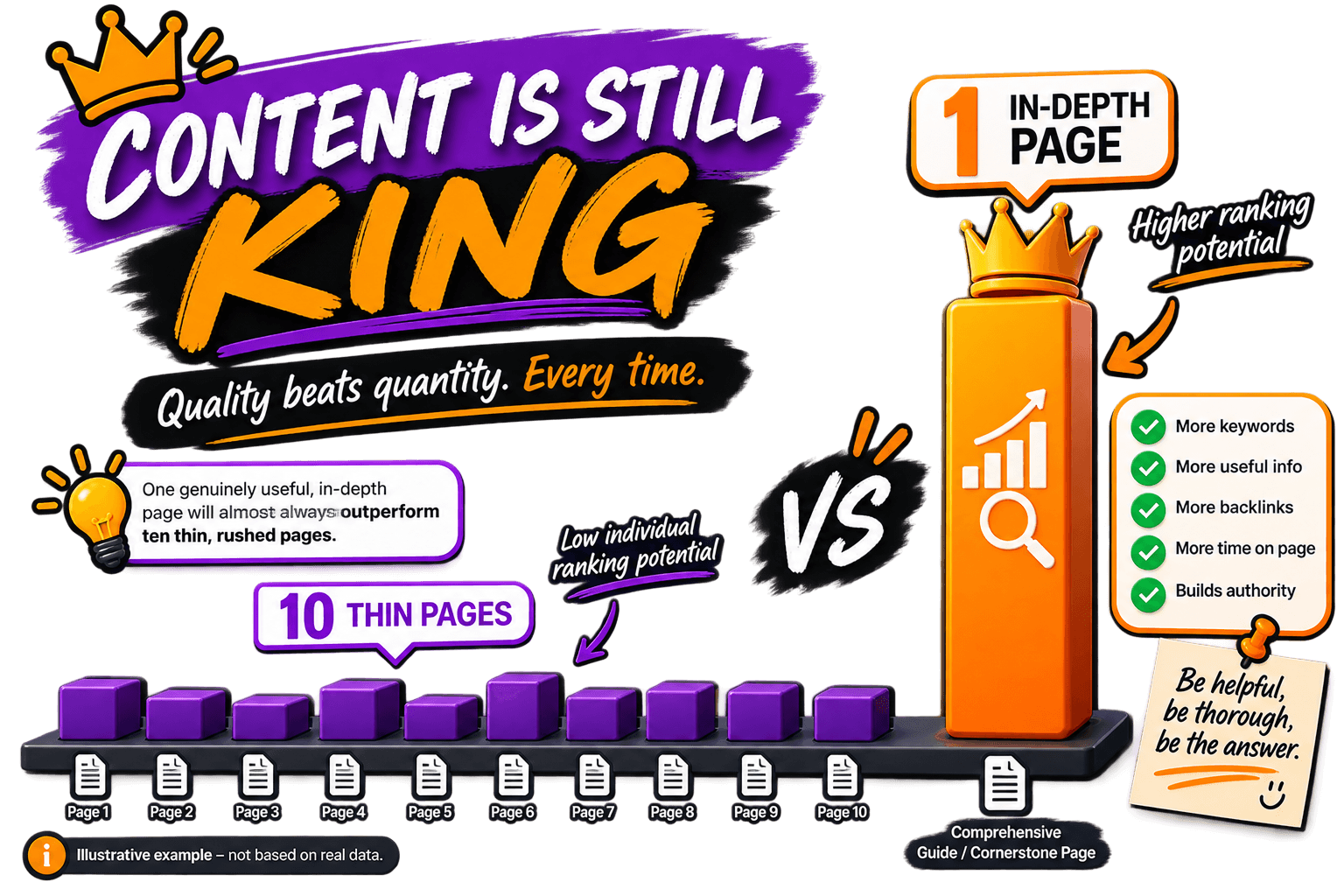
You’ll hear “content is king” thrown around so often it’s become a bit of a cliché, but it remains true because it’s actually accurate. Regularly publishing genuinely useful, well-written content whether that’s blog posts, guides, or detailed service pages gives search engines more reasons to find you, more opportunities to rank for different searches, and more evidence that you know what you’re talking about in your field.
This doesn’t mean churning out content for the sake of it. A handful of genuinely excellent, thorough pages will outperform dozens of thin, rushed ones every time. I’ve watched this play out with clients again and again: one properly researched, properly written cornerstone page will quietly outrank ten rushed ones a competitor pumped out in a week. Think about what your actual customers are wondering about before they buy from you, and answer those questions properly on your site.
Link Building And Why It Matters
Backlinks on other websites linking to yours will act as a kind of trust signal to Google. If reputable, relevant websites are linking to your content, that suggests your site is worth trusting and referencing. This was one of the original ranking factors Google built its whole algorithm around, and it still carries real weight today.
Building links properly is slow, honest work. It means creating content genuinely worth linking to, building relationships with other businesses and publications in your industry, and occasionally getting featured in local press or industry roundups. It doesn’t mean buying links or joining shady link exchange schemes, both of which can get your site penalised rather than helped. Moz’s guide on link building is a genuinely solid free resource if you want to go deeper here.
Local SEO, If You’re A Local Business {#local-seo}
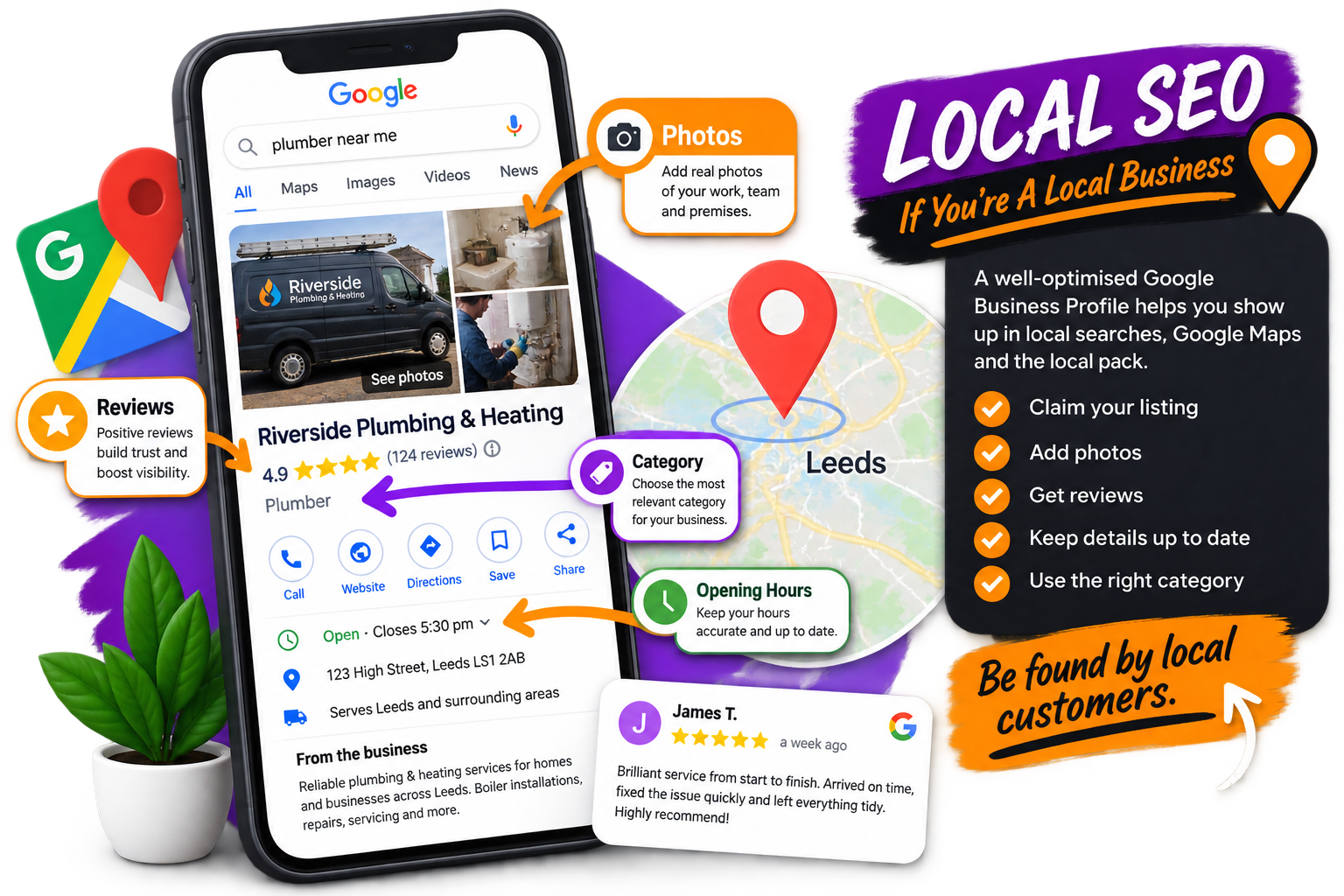
If you serve customers in a specific area, local SEO deserves its own bit of attention. This covers things like your Google Business Profile, consistent business information across directories, and location-specific content on your site. When someone searches “plumber near me” or “accountant in Leeds”, local SEO factors are what determine which local businesses actually show up.
Claiming and properly filling out your Google Business Profile is genuinely one of the highest-impact, lowest-effort things a local business can do, and it’s completely free. Reviews, accurate opening hours, photos, and a properly categorised listing all feed directly into how visible you are for local searches.
Why SEO Takes Time, And Why That’s Not A Bad Sign
This is probably the single most misunderstood part of the whole subject. SEO is not something you do once and see instant results from. It’s a gradual process, and it usually takes several months of consistent work before you start seeing meaningful movement sometimes longer, depending on how competitive your industry is and how far behind your site currently sits.
This isn’t because SEO is broken or slow for no reason. It’s because trust and authority genuinely take time to build, in the same way they do in real life. A brand new website with no history simply hasn’t earned the trust yet that an established, well-maintained site has built up over years. Be wary of anyone promising overnight rankings that’s usually a sign of shortcuts that could get your site penalised further down the line. I’ve inherited more than one client site that needed cleaning up after exactly that kind of promise.
Where To Actually Start
If you’ve read this far and you’re feeling a bit overwhelmed, that’s completely normal. SEO covers a lot of ground, and trying to tackle everything at once isn’t realistic, especially while you’re also running an actual business.
Start here:
- Check your Google Business Profile is claimed and complete, if you’re a local business.
- Look at your page titles and make sure they actually describe what each page is about.
- Check your site speed using PageSpeed Insights.
Small, consistent improvements genuinely add up over time.

Frequently Asked Questions
SEO is the process of making a website easier for search engines to find, understand, and trust, so it gets shown to people searching for related topics.
Most sites need several months of consistent work before seeing meaningful results, and often longer in competitive industries, because search engines need time to build trust in a site.
You can learn and apply the basics yourself, particularly on-page SEO and your Google Business Profile. Ongoing technical SEO, content strategy, and link building tend to benefit from experienced, hands-on management over time.
No. Repeating a phrase unnaturally can actively harm your rankings. Search engines now prioritise understanding search intent and rewarding natural, genuinely useful content.
Claiming and fully completing a Google Business Profile — it’s free, and it directly affects visibility for “near me” style searches.
Where I Can Help
I’m Anthony Graydon, and I run Authority Sites. Everything covered here the technical side, the content strategy, the local SEO, the actual site structure that makes all of this work properly together is what I handle for clients day in, day out. I don’t outsource, and I don’t hand you off to a junior team once the contract’s signed. You work directly with me from the first conversation through to ongoing results.
Learning the basics yourself is genuinely valuable, and I’d encourage anyone running a business to understand roughly how this all works. But actually implementing it properly, consistently, and without making the kind of mistakes that can quietly hurt your rankings, is a different job entirely one that takes years to get genuinely good at.
If you’d rather have someone experienced handle this properly while you focus on running your business, get in touch through my contact page and let’s have a proper chat about where your site currently stands and what it actually needs.